Mindfulness Meditation

I’m not one for new year’s resolutions but at the beginning of this year I decided to try incorporating mindfulness meditation into my life. This was an idea brought about by a feeling that I was living life in a semi-permanent state of anxiety; feeling the pressure of the now and the next thing to be done that was sneaking up behind that. I figured that some mindful meditation might offer a way in which I could carve out some time to intentionally slow myself down and try to alleviate some of that perceived stress.

To facilitate the practice of meditation, I found Headspace. After enjoying the free trial I subscribed to an annual plan. Since my purchase, I’ve also discovered (but haven’t tried) a free, Australian equivalent, Smiling Mind.

As somebody who had never traversed the path of mindfulness and meditation, I had no idea what to do, how to do it, nor what to expect from it. The great thing about Headspace is that it assumes this is the case for its new users. The app provides a helpful introductory course that helps guide one into the technique and its potential benefits.

For the first few months, I was intentional about carving out 10-15 minutes each day for the exercise. Within a couple of weeks I found it had a positive impact on my state of mind, and each day I looked forward to the time where I could intentionally sit and do nothing. However, life being what it is, after about five months I found I was going days without meditating, and the habit that had been forming once again dissipated.

In the last few weeks, I’ve made another conscious effort to undertake a session of meditation each day and once again I am enjoying the benefits it confers. Now, heading towards the end of August, my total meditation time recorded in the Headspace app is at about 1,000 minutes1 which equates to a bit less than 17 hours.

In these days of hyper-connectivity and a constant barrage of (often self-inflicted) interruptions, we are lacking quality time for ourselves. It’s hard to ā€˜unplug’ from the world. In response, taking a few minutes out of each day to dedicate to my own peace of mind seems a sensible investment. The greater sense of calm I feel after a mindfulness meditation session helps with focus thereafter and so the time ā€˜lost’ to the meditation activity is quickly made up through increased productivity. Plus, nobody is so important that they can’t be incommunicado for 15 minutes, especially me!


  1. although some of those minutes belong to my kid who enjoyed listening to a session as he fell asleep at night. 

Love of the Open Web

While I’ve grown up on the Internet, I also remember the pre-internet era well and spent most of my formative years there. I was a kid who was able to get a modem and connect it to the text-only world of Bulletin Board Systems and Usenet (when Usenet was a service for discussion, not just binaries). I spent hours exploring these worlds, finding like-minded people, and expanding my horizons as to what computers could enable by way of communication and engagement.

I was so excited on the day I got my own internet-based email address, until I realised I had nobody to email.1 Nevertheless, it was still a thrill to have the possibility of contacting anybody else in the world who may also have happened to have an email address. The open nature of email was really the first indicator of the power of the open internet.

As time went by, I kept up with the technology of the time. I remember skipping accounting classes at university because I was having more fun in the Unix labs browsing the web with Lynx. Later in my uni career, I would be skipping classes and browsing the web with an early version of Netscape Navigator. It was slow, but it was the future and I wanted a piece of it. The only web sites that were around at that point were really published by other geeks and there was a real sense of open exploration of what could be achieved. I still have memories of the early IMDB site, and even then the amount of information available was astounding.

The next port of call for me on my journey through the open web was blogging. I operated a since-departed (photo)blog that managed to gain a bit of traction and traffic over the few years that I ran it. This was back when hand-coding and CSS tweaking was a necessity, and there was no thought of, or need for, responsive design. Eventually though, I got tired of the whole thing and shut it down. I kept a text archive of the posts which I still have somewhere, and little bits of it remain at the Internet Archive. Sometimes, though, I wish I had been a better archivist of my own work even if just so I could look back on it from time to time.

After this time the web became ā€˜socialised’, in that all the action was on various social media platforms, be it MySpace(!), Facebook, Twitter, Instagram… the list goes on. The problem with all of these sites, though, is they are not open. Far from it; their motivation is to keep both you and your content captive to their walled garden so they can sell advertising based on your eyeballs.

These sites do not reflect the open web that I’ve always loved. I miss the days of easily-shareable content, where all that was required was a URL. I really wish that content wasn’t so reliant on companies as content platforms and that so much of the content wasn’t published simply as a means of monetising the attention of others.

This is why I am particularly interested in the currently-in-development micro.blog service. This appears to have the potential of offering the best of both worlds: the ease of use of social media, but with the open web philosophy that I so appreciate. Unfortunately I wasn’t part of the original Kickstarter project, so I don’t have any early access. I have, however, signed up to be notified and am following the developers RSS feed closely to watch it’s development. I really hope that it gets some genuine traction, and that this can lead to real-world success.

I know that we can’t go back to the way things were. The internet will never again be the Wild West, inhabited only by the zealot explorers. Now it’s a platform for everybody, and the commercial money isn’t going away anytime soon. Yet I will keep my RSS reader and maintain the search for those independent voices that I can follow who create and deliver interesting, independent content.


  1. Even before social media, the network effect was still relevant. 

On Charlottesville, VA

I am not an American, but my father and my siblings were born and lived in the USA. I have visited the country a number of times. I have spent time in Virginia, notably Lexington, which is about 70 miles away from Charlottesville, the town that has been tragically in the news this past week. While I don’t have the level of connection to the place that a United States citizen has, I do watch with interest and feel that I have at least some level of understanding of the American psyche.

From my perspective, what I saw in Charlottesville was a collection of white men who have been radicalised to the point of fanaticism and enabled by political leadership to intimidate and strike fear in others to their own ends. In a modern country it should never be reasonable for civilians to put on body armour and walk the streets with automatic machine guns. Carrying Nazi flags, performing Nazi salutes, and walking with burning torches1 echoes many sad and inglorious historical moments, from Hitler and WW2 to the KKK and acceptance of slavery (and the power imbalance in favour of white people that that confers).

I can only imagine what would have happened if non-white people had walked the streets similarly armed and garbed. I think there would have been an even more extreme response; which in itself highlights a level of underlying, unspoken racism that permeates the culture. I can’t help but think that if roles were reversed, and it were black people carrying machine guns in the street, that it would be seen as an uprising. Based on recent US police behaviour it might also have been possible the police would have been willing to shoot to kill.

Next we have the horrible situation of a young man driving a car at speed into a laneway filled with people. Such behaviour cannot be condoned and the fact that some are attempting to mount excuses and justifications is frightening in itself, particularly if they believe their own professions. That was an act of terrorism, fuelled by hate, which i assume was itself fuelled by the fear of losing power and relevance in society. As far as I can tell, that man, and his equivalents, are fearful that their position in the world is being disrupted and their reactionary response is to imbibe hate and act with extreme prejudice.

As for the President, I am of the view that he has incited and encouraged this vein of hate, then turned a blind eye to the subsequent despicable actions of his acolytes. It took him three days to speak out against the actions (via a prepared speech), and then a day later he couldn’t live with that being his official position so he backtracked, showing his true colours. That he should be President of the USA is an entirely strange and sad situation.

A key reason (but not the root cause) for this uprising is said to be in honour and respect of General Lee, a man of regard for Southerners. Yet times change, and who we should and do venerate must also change. The problem is, enacting that change means rebalancing the power relationship amongst the citizens of the United States, and particularly the South. As a result those threatened most by such change2 and who are most at risk of ‘losing’ as a result of any rebalancing are lashing out with extreme aggression in a sad and sorry attempt to maintain the status quo.

Change will happen. The clock cannot be turned back. Time and culture moves ever forward, even though this Charlottesville incident represents a step back. In the end I believe the tide of change will win out. I genuinely hope that tide brings equivalency to all citizens of the United States, irrespective of the colour of their skin, and that peace wins out.


  1. Albeit tiki torches that look like they were bought at Lowe's and probably made in China. 
  2. That is, white men. 

It’s Daddy and the Booj.

Subscription Pricing for Apps

The corner of the internet that I inhabit has been up in arms about yet another app, Ulysses, switching to a subscription-based pricing model. From the perspective of the developers trying to build a successful business this probably makes a lot of sense. The business analyst in me applauds them for finding an approach that will smooth revenue flows and help fund future development.

But changes like this can have unintended, or at least unforeseen, consequences. To my mind, the key question is how many users will switch over to this model? The developers may discover the addressable market shrinks considerably as their app will suddenly have a lot less appeal to hobbyists who are not earning revenue through their use of the app. They will probably sell subscriptions to authors and professional bloggers, but will that offset the losses? Did the developers truly understand the size of the market who would be willing to play for on-going use of the software?

User Centricity

I fear that developers are not taking a user-centric view to the subscription conundrum. Subscription revenue no doubt looks great in spreadsheet models with its recurring revenue. However, let’s apply the ‘job to be done’ approach to this issue, from the perspective of the end-user. I suggest that the job to be done is to provide a mechanism that will let me take notes that are ubiquitously available, and write occasional blog posts to be published to Wordpress. Boiled down further, the job to be done is text editing and organising.

So my choice is not to subscribe to Ulysses or not. My choices range from open source text editors, to Apple Notes, to a word processor, or an alternative subscription-based product. If I didn’t want to blog, I could get by with a paper notebook and a pen.

It also creates a further issue in that it will reduce the likelihood that I will bounce between a number of apps. Up until now, I had decided to use Ulysses for blogging, Bear for notes, Scrivener for work reports, and DEVONThink for research and storage. I’ve paid for all of these apps.

With subscriptions becoming more prevalent, I will have to reduce my app consumption because I don’t want to be on the hook every month for apps that I may not use. I don’t want to reduce my personal free cash flow by paying a swathe of subscriptions, particularly for apps that are essentially supporting a hobby that generates no income. I will become more selective in my software choice. My overall long-term expenditure on software may decline. If many users have the same opinion, then the overall market activity is going to decline. The outcome becomes worse for all developers.

As I said earlier, unintended consequences.

My Choice

This whole subscription brouhaha has led me to review my note-taking writing structure, and I’ve decided to rely on another subscription app I pay for, Bear. Those developers charge less for a very similar product, and they were up-front about the software being subscription-based from the outset. In my opinion, Bear has a nicer look and better reflects Markdown styles. The only thing I lose is direct-to-blog publishing. However, I can pretty easily copy or export text in Markdown or HTML, both of which can be directly pasted into the Wordpress CMS.

By choosing another subscription-based product, I demonstrate that I’m not entirely against recurring costs. But if I can have one recurring cost rather than two, then I’m all for that.

My situation is a real-world example of user-side app rationalisation that I think is likely to occur at scale, with the onset of subscription pricing.

Opened my Lego case for the first time in 30 years. Last thing I built still in there. #timecapsule #lego #masterbuilder

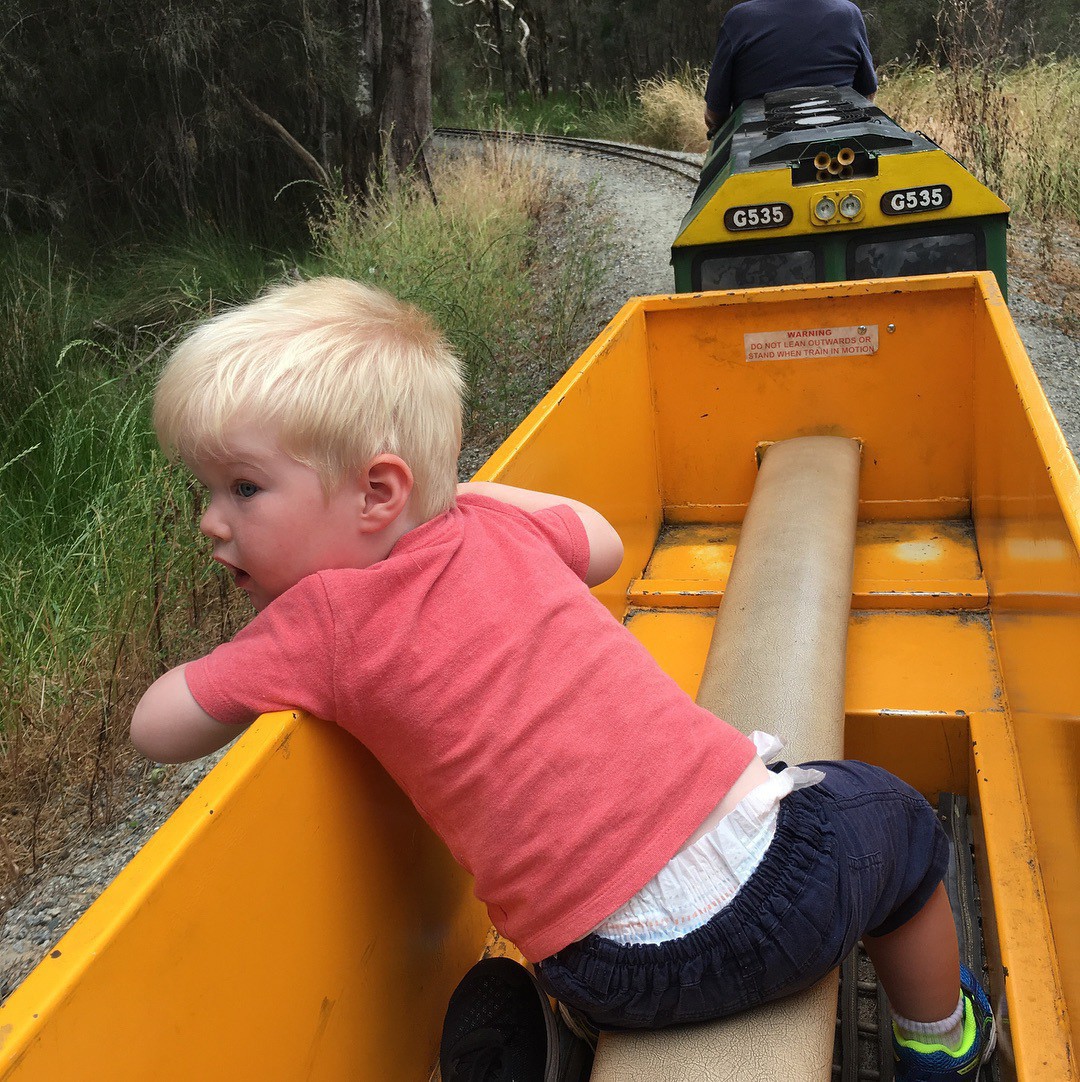
Wouldn’t eat lasagne but was happy to smash the yoghurt himself.

The Business Speedometer

Trying to run a business without useful and accurate performance information is like trying to drive a car without a speedometer. Sure, you will be able to guesstimate how fast you are going, and sometimes you’ll even get it right. You might even get away with a bit of speeding! Most of the time though, you will be driving at the wrong speed. You will either not be taking full advantage of the car’s performance or you’ll get a speeding ticket.

In a business sense, running a company without timely and accurate performance reporting may deliver occasional success, but it’s not a recipe for long-term sustainability. A lack of insightful reports detailing costs, sales, productivity and profitability generated through effective data capture at the source is likely to result in a lack of insight about what is critical to the company’s success.

Costs and Pricing

Production costs and pricing can be deceptive. Clearly, a firm must ensure ensure that the price they charge the customer accounts for the costs of the people and equipment directly involved in the production process. That price, however, also needs to have a sufficient margin attached to it such that it encompasses a share of all other cost overhead of the business, from rent and electricity, to paying for accounting and staff training. Furthermore, it has to incorporate a profit margin that will enable the business to retain some earnings for future investment and deliver a dividend to the investors/owners. Suddenly, the per unit price being charged needs to be much higher than may have initially been thought.

Without accurate information it can be easy to lose track of how effective this balance between price and cost is. Cross-subsidisation of profits across activities and products is another challenge. Soon enough, it can be almost impossible to understand what profit is being generated from each element of work. This can result in a situation occurring where both people and machinery are busy but the company loses money anyway. To avoid this frustrating eventuality, a business needs to ensure it is capturing and collating business information that will generate alerts at the time such a situation arises. Otherwise the problem will remain hidden and by the time it is discovered it will be too late to react with impact. Now the business is chasing its tail with the next piece of work not only having to cover all the standard costs but also make up for the losses incurred by the earlier work.

Identify Issues at the Source

If problems are only identified when complete revenue and expenditure figures are entered and aggregated within end of month financial reports, it is too late. Management needs to stay ahead of the game. A good manager needs to ensure that the business is capturing information throughout the production process, and that this information is able to deliver insights about the productivity, performance and profitability of its activities at any point in time.

Just as the job of a car’s speedometer is to provide real-time feedback, a business also needs to be able to read and react to its own (as close to) real-time performance. Without this structure the business is not being put in the best position to succeed, irrespective of any other activities underway.

Spotted the office plaque of my old school friend.

Haircut, check. 18 month vaccination, check. Not one cry during the jabs. Check!

Brrrr. Canberra!

Entropy in Business

Entropy is the loss of energy in a system to the point that it is no longer available for doing mechanical work. It is the reversion to mean; nature’s effort to return everything to stasis.

Entropy is occurring everywhere, all around us. It is a fact of our life. Companies are fighting entropy as well. Without concerted effort and capital being invested, and ensuring there is talent deployed throughout all levels of the business, the expectation is they will wither and die. People working within companies are also fighting their own entropic decline. Over time, people get bored, burnt out or generally lose interest in their job, which can lead to a decline in performance.

To fight entropy in business you need new inputs of energy. This can come from bringing new employees into the firm, who have new ideas and ways of thinking that can jolt the business and offer new opportunities. The business can find new products and markets and establish challenging goals to feed motivation and drive performance. Another option is investing in business improvement and better systems to automate work, thereby transferring the risk of entropy to machines and information technology, and away from individuals.

The laws of nature define that entropy cannot be defeated, but we as humans have become very adept at fighting it. Within companies, the fight against entropy also rages, and its the job of the board and management to set a direction and focus effort towards initiatives that will motivate the organisation to continue to battle to keep it at bay. The problem is that entropy is incessant. Companies need to continually guard against its debilitating effects, or suffer the inevitable consequence of decline.

Comments are Enabled

So as an experiment, I have enabled comments for the site. I’m not totally convinced that it’s a good idea, and fear that managing spam may outweigh any possible benefits. Nevertheless, in true scientific fashion, let’s run the experiment.

As for the real readers, play nice, okay?

Turning my Kid into a Meme

My lovely wife took a humorous photo of our son having a babyccino, a classic drink in Australian coffee shops these days, purpose designed for the little ones.

The photo was super-cute and funny in its own right, but I couldn’t resist turning it into an image macro meme. I like to think it makes a funny photo into something just a little better.

black coffee meme

Now You CV Me

In a further effort to establish andrewcanion.com as a genuinely useful resource for all things pertaining to me, I have now included a page dedicated to showcasing my curriculum vitae.

I was looking at my current CV a few days ago which still exists as a Word document based upon a custom design I cooked up about 15 years ago. Since it’s creation I’ve just continued to add to and tweak the design rather than build a new document. This ‘lazy man’ approach has been made easier by not actually moving jobs very often. Turns out, staying put has some advantages!

My CV, though, was an artefact of a paper-based era. I wanted to have something that was more dynamic, and a little more design-oriented that could offer some visual queues about the relevant stages of my career to date.

The de facto place for online CVs in the work world that I occupy is LinkedIn, so of course I keep my record of employment there. It’s where recruiters, acquaintances and stickybeakers all go to check out your professional bonafides. The cold hard truth is, however, that LinkedIn is just another social network funded by venture capital that is leveraging your information and privacy to sell advertising and ‘premium’ memberships. So if I’m promoting myself, I also want to be able to do that on a site which I own and control completely, and that isn’t using my information to make money for others.

So the first version of my self-hosted CV is now online. I’m sure I will continue to tweak and adjust it, but that’s part of the fun. It’s a resumĆ© and a creative outlet all rolled into one.

Day One Goes Subscription

So Day One has become the next software application to adopt a subscription pricing model. This app developer has monkeyed around with its price/product offering for some time, and Day One has always been towards the expensive end of the curve for what could harshly be described as a glorified text editor. I guess it was inevitable they would ultimately end up converting to a subscription model in an effort to smooth revenue flow. Currently the developer is stating it will continue to support the current app and won’t force a move to the subscription version, but there is no doubt the first foot has fallen. At some point, I’m sure the other shoe will drop and it will be subscription or bust!

I’m not against subscription-based business models for software. I pay subscription fees for YNAB, Setapp, 1Password, Fastmail, Headspace, and maybe some others. I am willing to pay for software that I use and enjoy, and that satisfies my own price/value decision matrix.

Day One’s announced subscription seems expensive, especially when converted to Australian dollars. Expensive enough that rather than happily paying to carry on with an app I have used for more than 4 years, I am instead casting around for alternatives. The best and most immediate alternative I can see is to move my journaling to Ulysses. I’ve found a Workflow, ah, workflow that auto-populates date, time and location into a neat header box so the journal entry has a basic level of context. What I would lose from Day One is the pretty and additional metadata and the journaling-specific user interface. Photo import can be replicated, albeit perhaps not quite as seamlessly. The major problem with Ulysses is that it just doesn’t feel like a journaling app - at least not yet. Maybe I would get used to it in that context with time?

As mentioned, I’ve used Day One consistently for four years, and it has gained enough of a mental grip on me that I might miss it were I to migrate. Still, there is a limit to the number of subscriptions my budget can handle. When I have other, fully paid apps just waiting to be used, it becomes difficult to justify paying yet more money on an on-going basis.

I’m probably still on the fence right now, but Ulysses may be taking the lead…

The Weekly Plan

I consider the two fundamental resources in work planning to be:

  1. The calendar
  2. The to-do list

The calendar represents the hard landscape: events that are non-negotiable, time-based and require you to be doing a certain thing, at a certain time, at a certain place, possibly with another certain person. If it’s in the calendar, it’s a certainty. Calendar entries are commitments to yourself and possibly others.

The to-do list is used to track tasks needed to be done to move the ball forward. The list is potentially filled with a lot of items that may not necessarily be linked with one another. They are commitments to yourself, but they are not tied to being done at a particular time and don’t generally require the involvement of others. I use OmniFocus for managing my task list, but it really doesn’t matter what is used, as long as there is a trusted location to track everything to be done.

As a general rule, I’m not a fan of putting tasks onto calendars. I think they are two distinctly different things that should exist in their own dedicated spaces. However, like any good rule, there are times when this rule should be broken.

Leveraging multiple calendars

The beauty of using modern electronic calendar systems is they support multiple calendars. The classic and most obvious application of this is creating seperate work and home calendars. In addition to these staples, however, it can be helpful to create a weekly plan calendar.

Each calendar’s visibility can be toggled on and off, depending on the needs of the moment.

Using the weekly plan calendar can facilitate the addition of tasks onto a calendar view without gunking up your regular calendars that represent real physical events and commitments. This leads to the next step: time blocking and setting commitments for your future self.

Time blocking

The purpose of time blocking is to help establish a plan for a forthcoming period of time and build accountability for your time. The idea is to create work sessions that are linked directly to items on your task list. Transferring tasks to a calendar and applying estimated timeframes in the form of a timed calendar entry can help build a visual map of work to be done. Visualisation is a great tool to help identify whether your to-do list is realistically achievable in the time available. It can also help enforce urgency by indicating how potentially little time is available for meaningful work. Finally, it can be a reward system. If you get ahead of your schedule, you’ve earned yourself some relaxation time, safe in the knowledge that you aren’t falling behind!

My approach

I generally reserve the time blocking approach for when I have a lot going on, and I’m starting to feel overwhelmed by it all. Ideally, at the start of the work week I will set aside half an hour, and look at my calendar of commitments. These are the scheduled events with other people that are locked in (usually weeks in advance) and that I need to fit all my other work around.

The next step is identifying the tasks that represent the ‘big rocks’ that I need to progress. What projects need to move forward this week? What are the tasks that need large sessions of time to get into a flow?1

Once I understand what time slots I have available for task-based work, I start creating related events on my weekly plan calendar, filling my days more completely. I need to take some care here though. I’m not an automaton, so it is important not to schedule every last minute of time. Doing that is just setting myself up to fail. In any week, unexpected things are bound to arise and time will be needed for this stuff, in addition to the general administrative tasks of email, communications, management issues, and so on.

With the weekly plan calendar populated and tessellated with my other calendars, I end up with a clear picture of my work week. At any point of time I know what I can and should be working on. I know that if I stick to the plan I set for myself, I will be closer to my goals at the end of the week than I was at the beginning. It’s a practical approach to personal accountability.

The overhead of doing this planning is not always worth the effort, but when lots is happening and it feels like control is being lost, this is a great way to reassert your plans and ensure that the important is not being overwhelmed by the urgent.

  1. Writing is a great example of this - you can't really do it for 30 minutes here and there; you need a solid chunk of several hours.

Moving to Ulysses

I’ve decided to go all-in with Ulysses for my writing. I’ve been a Scrivener user for the longest time, but writing in Markdown is now more relevant to me than rich text, and Ulysses makes writing in this format easy and enjoyable. Ulysses' iCloud sync is also much less annoying than Scrivener’s modal Dropbox sync.

Hardware Decisions are Hard

In the aftermath of Apple’s WWDC conference and an almost unprecedented number of new pieces of hardware have been released at what is theoretically a software development conference, I get to do some imaginary shopping.

For the past 18 months, Apple’s hardware lineup has been so out of date (except for iPhone, of course) that I’ve not even wanted to buy anything with imaginary money. They’ve righted the ship now, but in doing so are almost listing to the other side. Now it’s so difficult to identify the perfect device, I’m paralysed by choice.1

macOS

With regard to the Mac lineup, the 5K iMacs with P3 panels and Kaby Lake processors represent the first time I’ve been tempted by a desktop computer in about a decade. Combining this with extended iPad use as a mobile platform could actually work, come iOS 11.

But laptops are still the most flexible option. The MacBook (Adorable) is becoming competitive and is so diminutive, but it is still hamstrung by having a single port and when stacking price against performance, perhaps a MacBook Pro is the better option. The MacBook (Escape) is probably the pick here. Touchbar seems like a dead end that the market nor developers are excited by. Yet only the Touchbar models have TouchID which is a useful feature.

So, in terms of macOS, the most sensible use for my imaginary money is to keep it in my pocket and instead wander over to the iOS table, and see if this is an easier decision. My existing 2013 MacBook Pro has a few more years left in it, anyway.

iOS

This is the Apple cash cow platform, so what have they got to sell me? In terms of iPhones, I’m not even looking. Work provides me with an iPhone SE which is a form factor I quite like for basic tasks, and I’m not about to absorb another phone contract. Anyway, this is not an iPhone release event, so let’s move to iPad.

iPad

I’ve been a believer in iPad since it was released and I put in my pre-order as soon as the online store switched to pre-sale. I’ve been wanting to upgrade my iPad Air, and the first compelling reason to do that was the iPad Pro 12.9" (1st gen). But then the iPad Pro 9.7" was released and everything got out of sync with what model had what features. I knew the sensible thing to do was wait for the next revision.

My waiting has paid off, because these are the devices I’ve dreamed of. Beautiful 120Hz ProMotion displays, accelerated Pencil sampling and come iOS 11, proper support for multitasking. Yes, I want one! But which one? The 10.5" looks to be everything I could want, until I realise it doesn’t support two full screen iPad apps side-by-side. One of them has to use the iPhone view controller. That does not fit with my productivity needs.

So it looks like it falls to the iPad Pro 12.9 (2nd gen). This has all the power I want, but I will be trading off couch comfort. Where is my Goldilocks iPad?!

Missing the four quadrant product matrix

When Steve Jobs returned to Apple and started its turnaround, one of the first things he did was rationalise the product line down to a four quadrant matrix. It was simple: on one axis, professionalconsumer, on the other axis, laptopdesktop. Here was enough breathing room between each of the specs and the prices of these machines that it became quite easy to choose which was for you.

Now, as Apple’s product line expands, they have a much larger matrix. This has resulted in overlaps across price, capability and function. Is the iPad a suitable laptop replacement; or is a laptop a necessary complement to an iPhone?

With my imaginary money, I think my decision is to keep my MacBook Pro and replace my ageing iPad Air with an iPad Pro 12.9". That should be enough to keep me going for the next year or two, at which point solving the computer problem will be a more pressing problem which I hope, by that time, has a more apparent solution.

  1. They have become a perfect example of the theory of paradox of choice.